The special openings of the Gardens of the Landriana (Tor San Lorenzo, Rome) return in 2026.
Immersed in the tranquility of the Lazio coast, about 40 km south of Rome, the Gardens of the Landriana are a romantic and surprising place, where nature and design meet in a rare balance.
Spreading over 10 hectares within a vast private estate, the garden was created in the late 1950s and still retains the intimate and authentic character desired by the family that owns it.
Designed by the renowned landscape architect Russell Page and enriched over time with new botanical collections, the garden reflects the passion and refined taste of Lavinia Taverna, who has successfully combined botanical curiosity and aesthetic sensitivity. Heathers, hydrangeas, antique roses, and camellias accompany visitors on an ever-changing journey, designed to surprise in every season.
The Landriana is organized into 30 ''rooms'', each with its own identity. Roses are prominent in the Valley of the Ancient Roses, among borders of lavender, thyme, and carnations, in the Valley of Rosa mutabilis, along the Bonica rose avenue, and on the walls of an old country house draped in Rosa banksiae. The pastel colors, the evanescence of the White Avenue, the silver of the Olive Garden, and the delicate hues of the Blue Meadow envelop the visitor in a profound sense of peace and harmony.
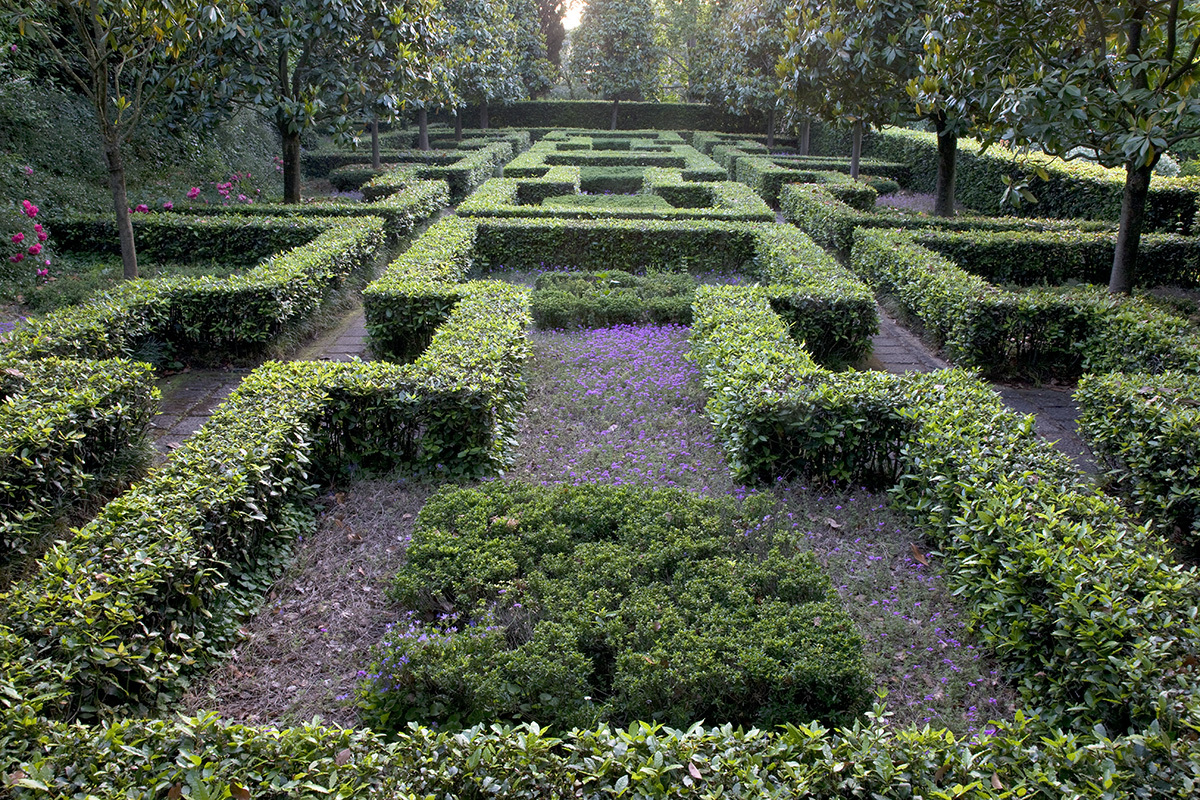
Much of the garden reinterprets the English landscape garden in a contemporary, Mediterranean style, while some rooms evoke the rigor of the formal Italian garden, such as in the Orange Garden, where the geometric design interacts with the perfectly spherical forms of the citrus trees and African Myrsine hedges.
Landriana offers a constant display of blooms throughout the year: daffodils, tulips, ornamental cherry trees, magnolias, and roses in spring; plumbago, datura, passion flowers, and hibiscus in summer; and camellias in autumn. A living garden, it changes with the seasons and invites you to return time and time again.
Visiting Landriana means taking a break from time, walking through landscapes that speak softly, and being amazed, step by step, by the garden's poetry.
Immersed in the tranquility of the Lazio coast, about 40 km south of Rome, the Gardens of the Landriana are a romantic and surprising place, where nature and design meet in a rare balance.
Spreading over 10 hectares within a vast private estate, the garden was created in the late 1950s and still retains the intimate and authentic character desired by the family that owns it.
Designed by the renowned landscape architect Russell Page and enriched over time with new botanical collections, the garden reflects the passion and refined taste of Lavinia Taverna, who has successfully combined botanical curiosity and aesthetic sensitivity. Heathers, hydrangeas, antique roses, and camellias accompany visitors on an ever-changing journey, designed to surprise in every season.
The Landriana is organized into 30 ''rooms'', each with its own identity. Roses are prominent in the Valley of the Ancient Roses, among borders of lavender, thyme, and carnations, in the Valley of Rosa mutabilis, along the Bonica rose avenue, and on the walls of an old country house draped in Rosa banksiae. The pastel colors, the evanescence of the White Avenue, the silver of the Olive Garden, and the delicate hues of the Blue Meadow envelop the visitor in a profound sense of peace and harmony.
Much of the garden reinterprets the English landscape garden in a contemporary, Mediterranean style, while some rooms evoke the rigor of the formal Italian garden, such as in the Orange Garden, where the geometric design interacts with the perfectly spherical forms of the citrus trees and African Myrsine hedges.
Landriana offers a constant display of blooms throughout the year: daffodils, tulips, ornamental cherry trees, magnolias, and roses in spring; plumbago, datura, passion flowers, and hibiscus in summer; and camellias in autumn. A living garden, it changes with the seasons and invites you to return time and time again.
Visiting Landriana means taking a break from time, walking through landscapes that speak softly, and being amazed, step by step, by the garden's poetry.